
3 Common Misconceptions About Sore Throat (and the Truth Behind Them)

Key takeaways
- What causes a sore throat? A sore throat is a symptom rather than a standalone disease. It can be caused by viral or bacterial infections, as well as non-infectious triggers such as vocal strain, acid reflux, air pollution, or irritation.7-10
- Can citrus juice cure a sore throat? No. Although citrus fruits contain Vitamin C, acidic juices can irritate an already inflamed throat and may make discomfort worse.2-4
- Will every sore throat go away on its own? Uncomplicated viral sore throats are self-limiting, but bacterial infections such as strep throat may require medical evaluation and prescription antibiotics. 9-11
- How can you relieve sore throat pain? Staying hydrated, avoiding irritants, and getting enough rest can help with comfort. For throat pain and inflammation, medicines containing benzydamine hydrochloride can provide anti-inflammatory, analgesic, and local anesthetic action.5
- When should you see a doctor? Seek medical advice if your sore throat is severe, persistent, worsening, or accompanied by symptoms that may indicate a bacterial infection or another condition requiring medical attention.
A sore throat is common, but not every piece of advice about how to manage it is accurate. Some familiar remedies may provide comfort, while others can irritate an already inflamed throat or cause you to overlook an infection that needs medical attention.1
So, what should you actually believe about a sore throat? Here are three common misconceptions—and the facts you should know instead.
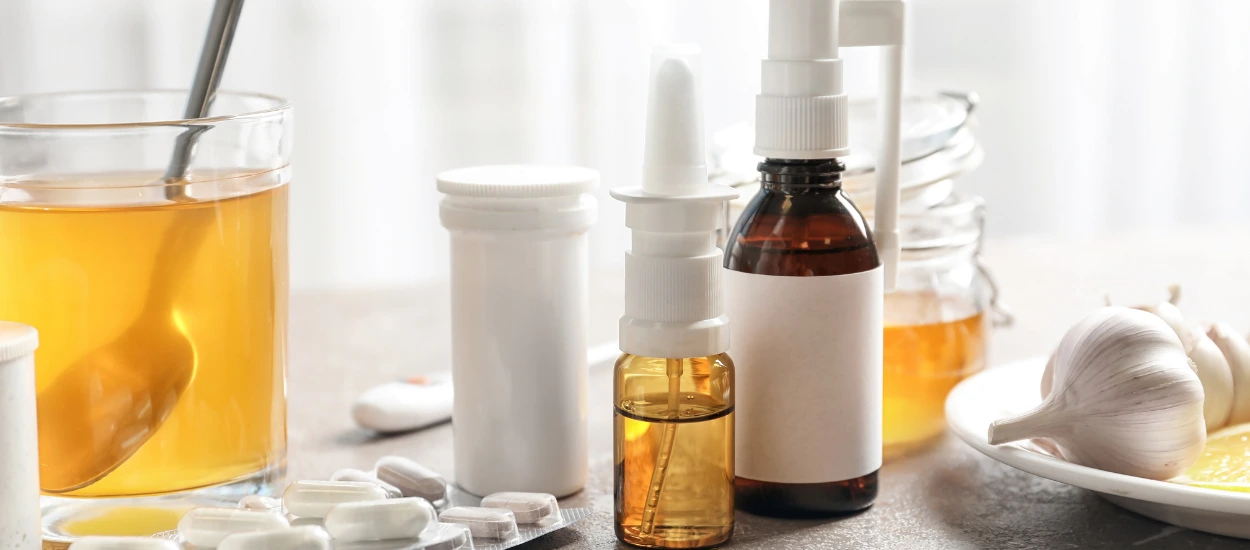
1. Does Drinking Citrus Juice Cure a Sore Throat?
The Myth
Drinking lemon juice, concentrated orange juice, or other citrus drinks is sometimes thought to help cure a sore throat because citrus fruits contain Vitamin C.
The Truth
Citrus juice does not instantly cure a sore throat. While Vitamin C is an essential nutrient that supports normal immune function, acidic citrus juices can irritate an already inflamed throat and may make it feel more uncomfortable.2-4
Lemons, oranges, and limes contain citric acid, which can sting irritated throat tissues.2 Citrus fruits also contain Vitamin C,3 but consuming Vitamin C should not be considered a direct treatment for an existing sore throat.
What Can You Drink When You Have a Sore Throat?
If acidic drinks make your throat uncomfortable, choose gentler, non-acidic fluids to help maintain hydration. Warm herbal teas or honey-infused drinks may also provide soothing comfort.2
The goal is simple: stay hydrated without adding further irritation to an already painful or inflamed throat.
2. Is a Sore Throat a Disease?
The Myth
“Sore throat” is sometimes treated as though it were a specific disease or diagnosis on its own.
The Truth
A sore throat is a symptom, not a standalone disease. Medically, throat inflammation is often referred to as pharyngitis, and it can have several different causes.6-10
What Causes a Sore Throat?
Sore throat can generally be associated with infectious or non-infectious causes.
Infectious causes include:
- Viral infections: Most sore throats are associated with viruses, including viruses that cause the common cold or flu.7-8
- Bacterial infections: Bacteria such as Group A Streptococcus can cause strep throat.9
Non-infectious causes include:
- Vocal strain from prolonged speaking, shouting, or singing
- Dry or polluted air
- Exposure to environmental irritants
- Spicy or very hot foods
- Gastroesophageal reflux disease (GERD) or acid reflux10
3. Will Every Sore Throat Go Away on Its Own?
The Myth
If you have a sore throat, you can simply wait for it to disappear because all sore throats eventually resolve without medical treatment.
The Truth
How Can You Tell If a Sore Throat Might Be Strep?
However, symptoms alone cannot reliably confirm strep throat. A healthcare professional may need to evaluate you and may perform appropriate testing before antibiotics are prescribed.
Do I Need Antibiotics for a Sore Throat?
Untreated strep throat can potentially lead to complications such as acute rheumatic fever and kidney inflammation.11 If strep throat is confirmed, prescription antibiotics may be needed to treat the bacterial infection and help prevent complications.9,11
What Can You Do to Relieve Sore Throat Pain?
Once you understand what may be causing your sore throat, the next question is often: “What can I do to make my sore throat feel better?”
But when throat pain and inflammation are the main concerns, treatment can also focus on relieving these symptoms. Medicines containing benzydamine hydrochloride provide anti-inflammatory, analgesic, and local anesthetic action.5
How Does Benzydamine Hydrochloride Help With Sore Throat Pain?
Benzydamine hydrochloride is a topical treatment used for inflammatory conditions of the mouth and throat. Its anti-inflammatory, analgesic, and local anesthetic properties can help address both inflammation and the pain associated with it.5
This is where Benzydamine hydrochloride (Difflam) can fit into sore throat care. Rather than simply addressing discomfort, benzydamine provides action against inflammation while also helping relieve pain.
It is also worth noting that it is the Philippines’ most prescribed sore throat brand by doctors.13
The different product formats of Benzydamine hydrochloride (Difflam) provide options depending on how someone prefers to manage sore throat pain and inflammation.
Which Difflam Format Is Right for You?
Benzydamine hydrochloride (Difflam Forte) Throat Spray provides relief in as fast as 60 seconds.14 Its long, multidirectional nozzle helps direct the spray toward painful and inflamed areas, including hard-to-reach areas of the mouth and throat.
Benzydamine HCl (Difflam) Lozenges contain benzydamine hydrochloride, providing anti-inflammatory, analgesic, and local anesthetic benefits. The lozenge slowly dissolves in the mouth, releasing its active ingredient to the mouth and throat, to provide soothing relief.
For those looking for an added antiseptic benefit, Benzydamine HCl + Cetylpyridinium Cl (Difflam) Lozenges combine benzydamine hydrochloride with cetylpyridinium chloride, an antiseptic ingredient.12
Benzydamine hydrochloride (Difflam) Solution is a gargle/rinse containing benzydamine hydrochloride. It provides anti-inflammatory, analgesic, and local anesthetic activity and is used topically for conditions of the mouth and throat.15-17
Meanwhile, Benzydamine hydrochloride + Chlorhexidine gluconate (Difflam-C) Solution combines benzydamine hydrochloride with chlorhexidine gluconate, providing anti-inflammatory, analgesic, local anesthetic, and added antiseptic benefits.16-18
In simple terms, the different formats allow consumers to choose an appropriate form of sore throat care based on their needs and the product’s directions for use.
When Should You See a Doctor for a Sore Throat?
Most sore throats are not serious, but persistent or severe symptoms should not simply be ignored.
Consider consulting a doctor if:
- Your sore throat is severe or getting worse.
- Your symptoms persist or do not improve as expected.
- You have symptoms that may suggest a bacterial infection.
- You have difficulty breathing, swallowing or other concerning symptoms.
- You are unsure whether your symptoms are caused by a viral infection, bacterial
infection, or another condition.
A healthcare professional can help determine the likely cause and recommend the appropriate treatment.
Frequently Asked Questions About Sore Throat
No. Vitamin C supports normal immune function, but it should not be considered a direct cure for an existing sore throat.3-4 Acidic citrus juices may also irritate an already inflamed throat.2
Lemon contains Vitamin C, but its acidity may irritate an already sore or inflamed throat.2 If lemon or other citrus drinks cause stinging or discomfort, choose a gentler, non-acidic drink instead.
Strep throat may cause sudden throat pain, fever, swollen tonsils, and swollen lymph nodes, often without a cough or runny nose.9 However, symptoms alone cannot
reliably confirm strep throat, so medical evaluation and is necessary appropriate testing may also be done.
Not necessarily. Antibiotics do not treat viral infections. They may be prescribed when a bacterial infection such as strep throat is confirmed or considered appropriate by a healthcare professional.9
Staying hydrated, avoiding throat irritants, and getting adequate rest may help you stay comfortable. For pain and inflammation, medicines containing benzydamine hydrochloride, such as Benzydamine hydrochloride (Difflam), can help as these provide anti-inflammatory, analgesic, and local anesthetic action5 in one.
Benzydamine hydrochloride (Difflam Forte) Throat Spray provides relief in as fast as 60 seconds.14 Its long, multidirectional nozzle also helps target painful and inflamed areas, including hard-to-reach areas of the mouth and throat.
Both contain benzydamine hydrochloride for anti-inflammatory, analgesic, and local anesthetic benefits. The Benzydamine HCl + Cetylpyridinium Cl formulation additionally contains cetylpyridinium chloride, providing an added antiseptic benefit.12
See a doctor if your symptoms are severe, persistent, worsening, if you experience difficulty in breathing or swallowing or symptoms that may indicate a bacterial infection or another condition requiring medical attention.
The Bottom Line
Not every sore throat is the same—and not every popular remedy is the right one.
Understanding what is behind your sore throat can help you choose the appropriate way to manage your symptoms. When sore throat pain and inflammation are the main concerns, Benzydamine hydrochloride (Difflam) products provide anti-inflammatory, analgesic, and local anesthetic action to help provide targeted relief.
Not recommended for children below age 6 without medical advice. If symptoms persist, consult your doctor.
ASC xxxxx
References:
- Buensalido JAL. Bacterial pharyngitis. Medscape Drugs & Diseases. Updated August 24, 2023. Accessed August 10, 2026. https://emedicine.medscape.com/article/225243-overview.
- Medical News Today. How to make a sore throat go away fast. Medical News Today website. Published February 17, 2017. Updated August 10, 2026. https://www.medicalnewstoday.com/articles/315937#avoid
- Sir Elkhatim KA, Elagib RAA, Hassan AB. Content of phenolic compounds and vitamin C and antioxidant activity in wasted parts of Sudanese citrus fruits. Food Sci Nutr. 2018;6(5):1214-1219. Published 2018 May 8. doi:10.1002/fsn3.660
- Torrens K. Which natural cold remedies actually work? BBC Good Food. Published October 22, 2024. Accessed August 10, 2026. https://www.bbcgoodfood.com/health/health-conditions/curious-cold-remedies.
- Turnbull RS. Benzydamine Hydrochloride (Tantum) in the management of oral inflammatory conditions. J Can Dent Assoc. 1995;61(2):127-134.
- WebMD. Pharyngitis: Symptoms, Causes, and Types. WebMD website. Updated September 19, 2024. Available from: https://www.webmd.com/cold-and-flu/pharyngitis. Accessed August 6, 2026.
- Bower JR. Pharyngitis. Netter’s Infectious Diseases. 2012;177-182. doi:10.1016/B978-1-4377-0126-5.00033-1
- Centers for Disease Control and Prevention. Sore throat basics. Centers for Disease Control and Prevention website. Updated April 17, 2024. Accessed August 6, 2026. https://www.cdc.gov/sore-throat/about/index.html.
- Shulman ST, Bisno AL, Clegg HW, et al. Clinical practice guideline for the diagnosis and management of group A streptococcal pharyngitis: 2012 update by the Infectious Diseases Society of America. Clin Infect Dis. 2012;55(10):e86-e102. doi:10.1093/cid/cis847. Available from: https://academic.oup.com/cid/article/55/10/1279/324779?login=false. Accessed August 6, 2026.
- Mayo Clinic Staff. Sore throat: symptoms & causes. Mayo Clinic website. Published April 12, 2025. Accessed August 11, 2026. https://www.mayoclinic.org/diseases-conditions/sore-throat/symptoms-causes/syc-20351635.
- Mayo Clinic Staff. Strep throat: symptoms & causes. Mayo Clinic website. Published November 30, 2022. Accessed August 11, 2026. https://www.mayoclinic.org/diseases-conditions/strep-throat/symptoms-causes/syc-20350338.
- Steyer A, Marušić M, Kolenc M, Triglav T. A throat lozenge with fixed combination of cetylpyridinium chloride and benzydamine hydrochloride has direct virucidal effect on SARS-CoV-2. COVID. 2021;1(2):435-446. doi:10.3390/covid1020037
- IQVIA Solutions Philippines, Inc. per PMDI MAT JUNE 2026. Used with permission.
- Valerio C, Di Loreto G, Salvatori E, Cattaneo A. Comparative evaluation of rapidity of action of benzydamine hydrochloride 0.3% oromucosal spray and benzydamine hydrochloride 3 mg lozenges in patients with acute sore throat: A phase IV randomized trial. Medicine (Baltimore). 2023;102(13):e33367. doi:10.1097/MD.0000000000033367
- iNova Pharma Philippines Inc. Difflam Solution (Benzydamine Hydrochloride 1.5 mg/mL) Patient Information Leaflet. iNova Pharma Philippines Inc; 2022. Approved February 17, 2022.
- Almazan NA. Benzydamine HCl 0.15% for oropharyngeal diseases and surgeries: a review of clinical trials. Philipp Sci J. 2009;42(1):37-42.
- Wethington JF. Double-blind study of benzydamine hydrochloride, a new treatment for sore throat. Clin Ther. 1985;7(5):641-646.
- iNova Pharma Philippines Inc. Difflam-C Solution (Benzydamine Hydrochloride + Chlorhexidine Gluconate 22.5 mg / 18 mg per 15 mL) Patient Information Leaflet. iNova Pharma Philippines Inc; 2021. Approved December 16, 2021.